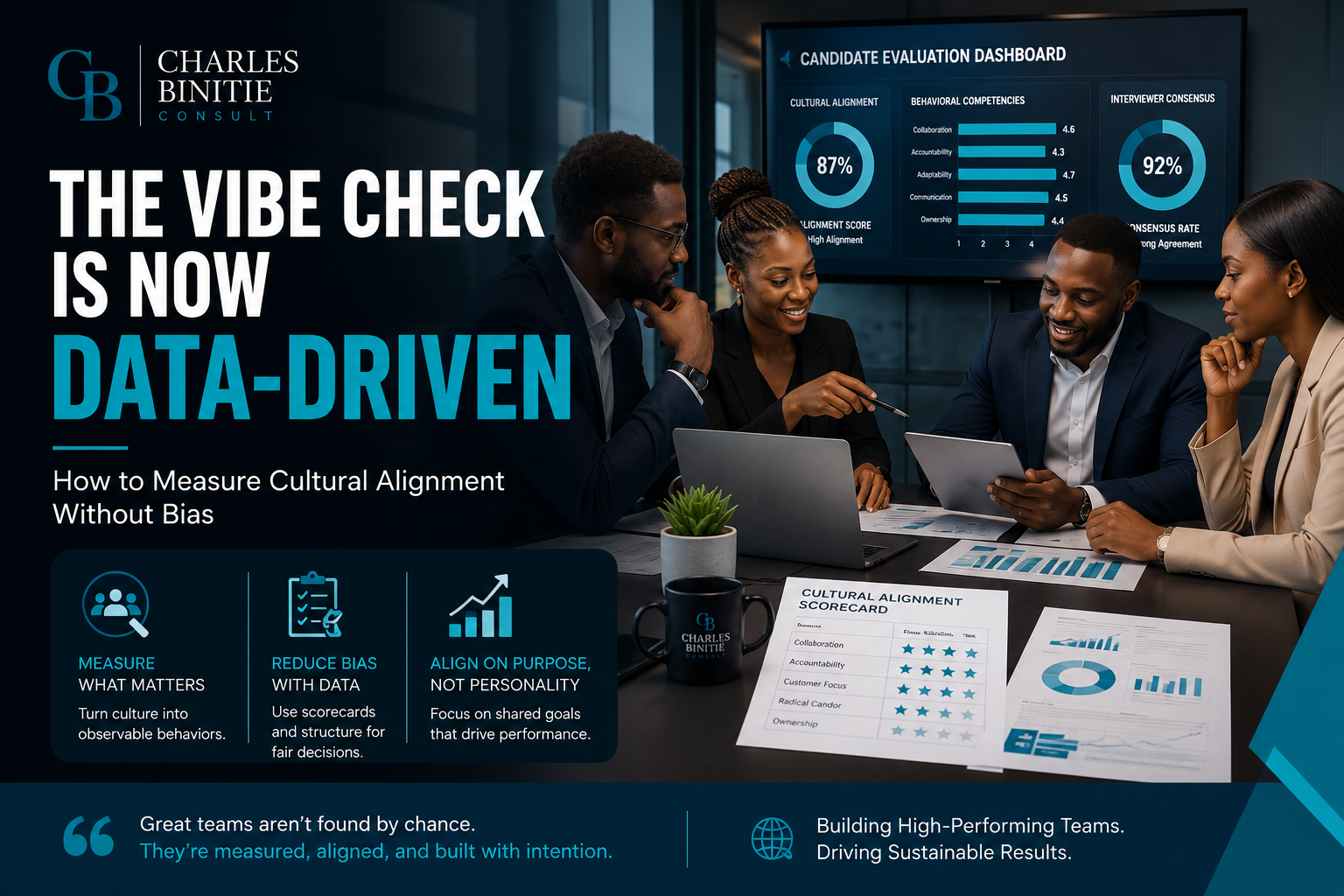
Cultural alignment can be measured using structured, behavior-based frameworks.
Standardized scorecards reduce bias and improve hiring consistency.
True alignment focuses on shared goals, not shared personalities.
Hiring decisions often rely on instinct.
Many teams still depend on a “vibe check.” However, this approach introduces bias and inconsistency. A better approach is using data-driven cultural alignment in hiring. Research shows that 77% of adults consider company culture before applying. Candidates aligned with culture are also more productive. This makes cultural alignment a measurable business priority, not a soft concept. The challenge is clear. How do you measure alignment without hiring people who simply “feel familiar”?
Defining Culture as Measurable Behavior Culture must move from abstract ideas to observable actions. A “good fit” is not about personality. It is about how someone behaves under real conditions. For example, a company that values direct communication must test it. Candidates should demonstrate how they give and receive feedback. This can be done through structured scenarios. When values become behaviors, hiring becomes clearer. Instead of saying “I liked them,” teams assess specific actions. This creates consistency across interviews.
Using Scorecards to Remove Bias A structured scorecard is essential. Every interviewer should use the same evaluation framework. This ensures fairness and clarity. Each candidate is rated against defined cultural markers. These are scored on a consistent scale. This removes vague judgments and replaces them with data.
Effective scorecards include:
Behavioral interview questions tied to company values
A clear rating scale for each competency
Evidence-based scoring guidelines
Interviewer notes focused on observable actions
This approach creates a shared language. It also exposes outlier opinions. When one interviewer disagrees, the data explains why. At this stage, organizations begin to fully implement data-driven cultural alignment in hiring. Decisions become structured, transparent, and defensible.
Alignment vs. Mimicry in Hiring Many companies confuse alignment with similarity. This is a costly mistake. Alignment means sharing goals and direction. Mimicry means sharing personality traits or backgrounds. Only one drives performance. Studies show that cultural fit improves retention. However, performance improves only when alignment is based on shared goals. A strong hiring process focuses on the company’s “North Star.” This includes mission, priorities, and outcomes. Candidates should align with these, not social preferences. This shift enables diversity of thought. It also strengthens long-term team performance.
Building a Scalable Cultural Alignment System To operationalize cultural alignment, organizations need structure. This ensures consistency across teams and hiring cycles.
Key components include:
Clearly defined company values translated into behaviors
Standardized interview guides for all roles
Training for interviewers on bias awareness
Regular calibration sessions to align scoring standards When these systems are in place, hiring becomes repeatable. It also becomes scalable across departments.
Conclusion: From Intuition to Insight The future of hiring is not about removing the vibe. It is about validating it with data. Organizations that measure cultural alignment build stronger teams. These teams are aligned in purpose but diverse in thinking. That balance drives innovation and growth. A structured approach transforms hiring from subjective judgment into strategic decision-making. It ensures fairness while improving performance outcomes.
Ready to build a bias-free hiring system? Contact us: @charlesbinitieadmin.